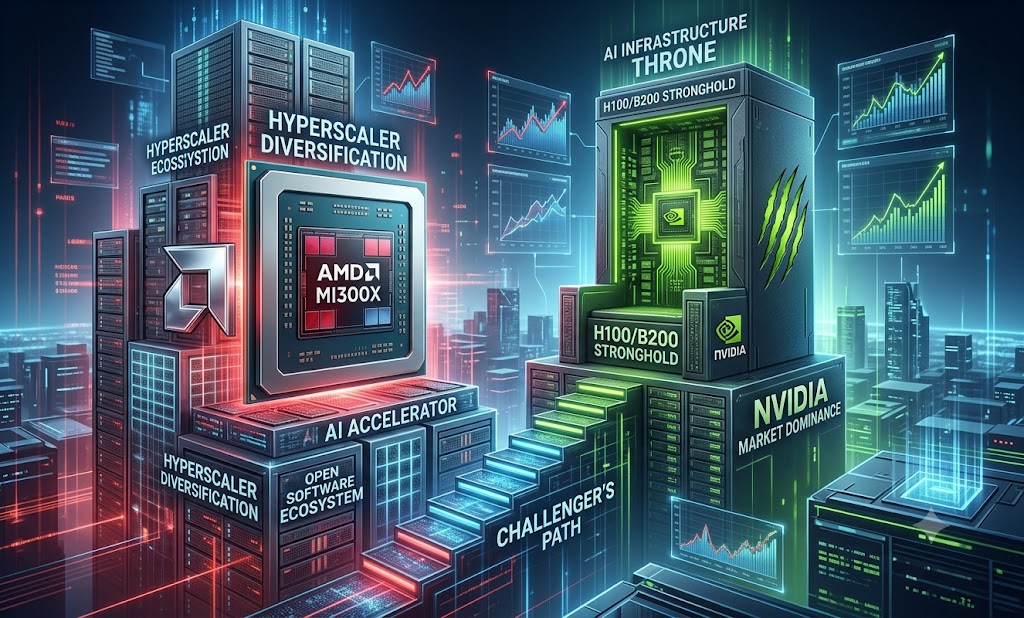
While the GPU battle between NVIDIA and AMD grabs headlines, the true bottleneck for AI performance is memory bandwidth. Without high-speed, high-capacity memory, even the fastest GPUs remain underutilized. This brings HBM (High Bandwidth Memory) manufacturers to the center stage of the AI investment thesis.
Why Memory Matters
In the era of massive Large Language Models (LLMs), the limiting factor is no longer just compute power, but how fast data can be fed to the processor.
- The HBM Advantage: HBM chips allow for significantly higher data throughput compared to traditional DDR5 memory, directly reducing the latency in AI training and inference.
- Supply-Demand Mismatch: The production of HBM is complex and capital-intensive. As AI infrastructure expands, demand is consistently outstripping supply, creating significant pricing power for top-tier memory suppliers.
Key Trends to Watch
| Trend | Impact on AI Infrastructure |
| HBM3e Adoption | Setting a new standard for bandwidth capacity |
| Capacity Expansion | Heavy CAPEX requirements limit new competitors |
| Data Center Integration | Direct impact on power efficiency and operational cost |
Strategic Outlook
For investors, memory manufacturers are a “picks and shovels” play. Unlike the high-volatility GPU market, the memory sector provides a more stable, albeit cyclical, exposure to the structural growth of AI. It is an essential component of any diversified AI infrastructure portfolio.
Conclusion
As we look beyond the GPU cycle, the “Memory Wall” remains the most critical challenge for AI developers. Companies that can solve this bottleneck at scale will capture a significant share of the total AI capital expenditure.
Disclaimer: This analysis is for educational purposes only and does not constitute financial, investment, or legal advice. Please refer to our full Disclaimer before making any investment decisions.